Canadians can visit Portugal visa-free for 90 days in any 180-day period; to stay longer, you need the D8 Digital Nomad Visa (~€3,480/month income) or the D7 Passive Income Visa. This FAQ covers Schengen rules, costs, timelines, taxes, and health insurance for Canadian remote workers.
This is the FAQ I wish someone had handed me before I spent two weekends reading Portuguese consulate PDFs.
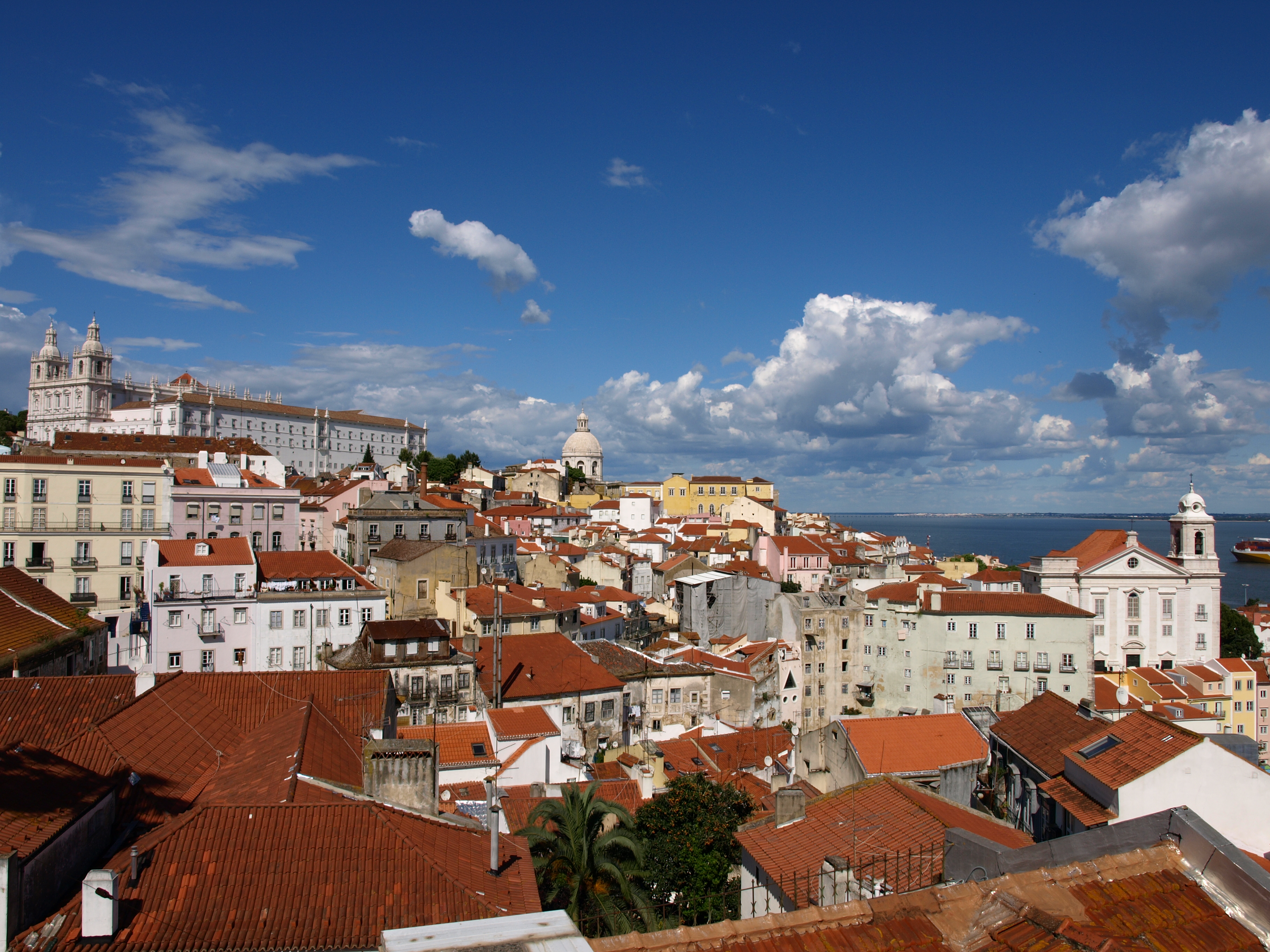
View of the Alfama quarter in Lisbon Portugal.JPG by Aubry Françon via Wikimedia Commons, licensed under CC BY-SA 3.0

Your Portugal Long-Stay Options at a Glance
| Option | How Long | Apply Before Travel? | Income Requirement | Cost (Approx) | Best For |
|---|---|---|---|---|---|
| Tourist entry (Schengen) | Up to 90 days in 180 | No | None | Free | Scouting trips, short remote-work stints |
| D8 Digital Nomad Visa | 4-month entry → 2-year residence permit → renewable to 5 years | Yes | ~€3,480/month (~$5,200 CAD) | $400–$700 CAD in fees + optional legal fees | Canadian remote workers staying 6+ months |
| D7 Passive Income Visa | Same renewal structure as D8 | Yes | ~€870/month (~$1,300 CAD) passive income | $400–$700 CAD in fees + optional legal fees | Retirees, pension, investment income |
| Student visa | Duration of program | Yes | Program-dependent | Tuition varies | Enrolling in a Portuguese school or language program |
The 90-Day Rule
Can Canadians stay in Portugal for more than 90 days without a visa?
No. As a Canadian passport holder, you can enter the Schengen Area (which includes Portugal) visa-free, but only for 90 days in any rolling 180-day period. If you want to stay beyond that, you need a long-stay visa issued by the Portuguese consulate before you leave Canada.
What exactly is the Schengen 90/180 rule?
It's a rolling window, not a calendar reset. At any moment, the last 180 days cannot contain more than 90 days spent in Schengen countries combined. The clock doesn't restart when you leave for a quick trip to Morocco or the UK. The EU publishes a free Schengen Calculator. If you travel Europe a lot, bookmark it. People who get caught out usually assumed a border run resets the clock. It doesn't.
What happens if I overstay my 90 days in Portugal?
Short overstays of a day or two are often waved through with a small fine at the airport, roughly €50–€200. Overstay by a week or more and you risk a Schengen-wide entry ban of up to three years. The risk grows fast. Your Canadian passport gets flagged, and the next time you try to fly into any Schengen country you're explaining yourself to a border officer. Not a fight worth picking.
The D8 Digital Nomad Visa
What is Portugal's D8 visa?
The D8 is Portugal's dedicated remote-work visa, launched in October 2022. It's built for people who earn income from employers or clients outside Portugal and want to live in Portugal while doing that work. Two versions exist: a temporary stay D8 (up to one year, no residency path) and a residence D8 (4-month entry visa → 2-year residence permit → renewable to 5 years → pathway to permanent residence or citizenship).
Most Canadians who plan to stay longer than a year want the residence version.
Who qualifies for the D8?
You need to be a non-EU passport holder (Canadians qualify), earning remote-work income from outside Portugal, above the minimum income bar. You also need:
- Accommodation arranged in Portugal (12-month rental contract or equivalent proof)
- A clean criminal record check (RCMP background, apostilled)
- Private health insurance meeting Schengen minimums
- Proof of income for the last 3 months
What's the income requirement for 2026?
About €3,480 per month, or four times the Portuguese minimum wage. In CAD that's roughly $5,200/month, or ~$62,000 CAD annually. You can prove it with pay stubs, bank statements, or invoices from clients over a 3-month window. This is the single biggest filter. Most Canadian applicants who clear it are mid-career in tech, product, design, consulting, or content creation.
How much does the D8 cost?
Consulate fees run around €90 for the visa application and €170 once you're in Portugal to get your residence permit issued by AIMA (the Portuguese immigration agency). Add document translations, apostilles, and courier fees. Out-of-pocket total before legal help: $400–$700 CAD. Hiring an immigration lawyer runs $1,500–$4,000 CAD extra, worth it if your situation has any wrinkle (self-employed income, US clients paid through a Canadian corp, dependents on the application).
How long does the D8 process take from Canada?
Plan on 60 to 120 days start to finish. You apply in person at the Portuguese Consulate General in Toronto (covering most of Canada) or Montreal (Quebec and Atlantic Canada). After approval, you get a 4-month entry visa stamped in your passport. Once you're in Portugal, you book an AIMA appointment to convert the entry visa into a 2-year residence permit. That step can take another 2–4 months.
The catch: AIMA backlogs have been brutal. Appointments in Lisbon often book out six months in advance. Smaller cities like Braga or Coimbra have shorter queues.
The D7 and Other Options
What's the difference between the D7 and D8?
The D7 is for passive income: pensions, investment dividends, rental income, royalties. The D8 is for active remote-work income. If you're under 55 and earning a salary or client invoices, D8 fits. If you're semi-retired with Canadian pension income or dividend-paying investments, D7's income bar is much lower (~€870/month, or ~$1,300 CAD). The residency path, fees, and renewal structure are similar.
Some Canadians with a mix of income (part pension, part consulting) use a lawyer to figure out which visa category works best.
Can I get a student visa to stay longer?
Yes, if you enrol in a Portuguese university, language school with DGES-recognized programming, or accredited vocational program. Full-year Portuguese language programs in Lisbon and Porto cost $4,500–$8,000 CAD and qualify you for a student visa. A few Canadians use this as a Plan B when they don't clear the D8 income bar. You get a year of residence and learn the language, which helps with every other visa category afterward.
Practical Questions for Canadians
Do I need to pay Portuguese taxes if I'm there on a D8 visa?
If you spend more than 183 days in Portugal in a calendar year, Portugal considers you a tax resident and wants tax on your worldwide income. Canada has a tax treaty with Portugal, so you won't get double-taxed on the same income. You'll still file in both countries, and usually end up paying whichever rate is higher.
The NHR (Non-Habitual Resident) scheme that made Portugal famous for flat 20% tax treatment on foreign income closed to new entrants at the end of 2023. A replacement called IFICI launched in 2024, but it's narrower and applies mainly to scientific research and specific skilled-trade categories. Most remote workers don't qualify. Talk to a cross-border accountant before you assume anything about your Portugal tax bill.
Does my Canadian health insurance cover me in Portugal?
No. Provincial health cards (OHIP, MSP, RAMQ) don't cover you outside Canada. They never did. For the D8 application you need private health insurance meeting Schengen minimums (typically €30,000 coverage, valid across all Schengen states). Cigna Global, Allianz Worldwide Care, IMG Global, and Safetywing are the names Canadians tend to pick; expect $90–$220 CAD/month for a healthy 30-something.
Once you hold a Portuguese residence permit, you can register with SNS (the Portuguese public health system). SNS is solid but slow. Most Canadian remote workers keep a private top-up for GP and specialist appointments.
Can I travel to other Schengen countries on a Portuguese D8?
Yes. A Portuguese residence permit gives you Schengen travel rights: up to 90 days in any 180-day period across the other Schengen countries. You can spend a long weekend in Paris or two weeks in Berlin without it eating into your Portugal residency. Most Canadian D8 holders use Portugal as a base and take regular weekend trips around Europe.
Can I bring my spouse and kids?
Yes, through family reunification. Your spouse/common-law partner and dependent children can apply as your dependents. The main applicant needs to show sufficient income to support each dependent: typically 50% of the minimum wage for a spouse and 25% for each child, added on top of the main €3,480 threshold. For a family of four that works out to roughly €5,220/month (~$7,800 CAD) of required income.

Historic buildings along the Douro River, Porto (24378866858).jpg by Matt Kieffer via Wikimedia Commons, licensed under CC BY-SA 2.0
.jpg)
What I'd Actually Do
Book a 6–8 week scouting trip first on the tourist 90-day window. Four weeks in Lisbon, two or three in Porto. Come home, decide if Portugal is the fit, then apply for the D8. The D8 process is slow enough (documents, consulate appointments, AIMA backlog) that you want to know what you're signing up for.
Lisbon is the default for Canadian remote workers: more coworking, bigger English-speaking scene, a dense nomad community. It's also the most expensive. Porto costs about 30–40% less with a quieter feel and fewer direct flights from Canada. If your income's closer to the D8 floor, Porto lets your money go further.
Related Guides
- Working remotely from Lisbon as a Canadian: visa, costs, internet, where to stay
- Best digital nomad destinations for Canadians — 2026 guide
- Two weeks in Portugal: a realistic itinerary with costs for Canadians (2026)
- Lisbon vs. Porto for a couples trip: FAQ for Canadians
Current Deals from Canada
Flights from YYZ and YVR to Lisbon (LIS) typically run $600–$900 CAD return in shoulder season, with sales into the $450–$550 range most common in November and early February. TAP Air Portugal and Air Transat run the cheapest direct routes; Air Canada connects through Frankfurt, Zurich, or London. Porto (OPO) is usually a connection through Lisbon, London, or Frankfurt. Add $80–$150 CAD to the Lisbon fare.
- Find the best YYZ→LIS fares on Expedia
- Find the best YVR→LIS fares on Expedia
- Browse Lisbon long-stay apartments on Booking.com
- Browse Porto long-stay apartments on Booking.com
See the live Portugal deals page for current fare alerts from Canadian airports.
FareNorth earns a commission on bookings made through links on this page, at no extra cost to you.